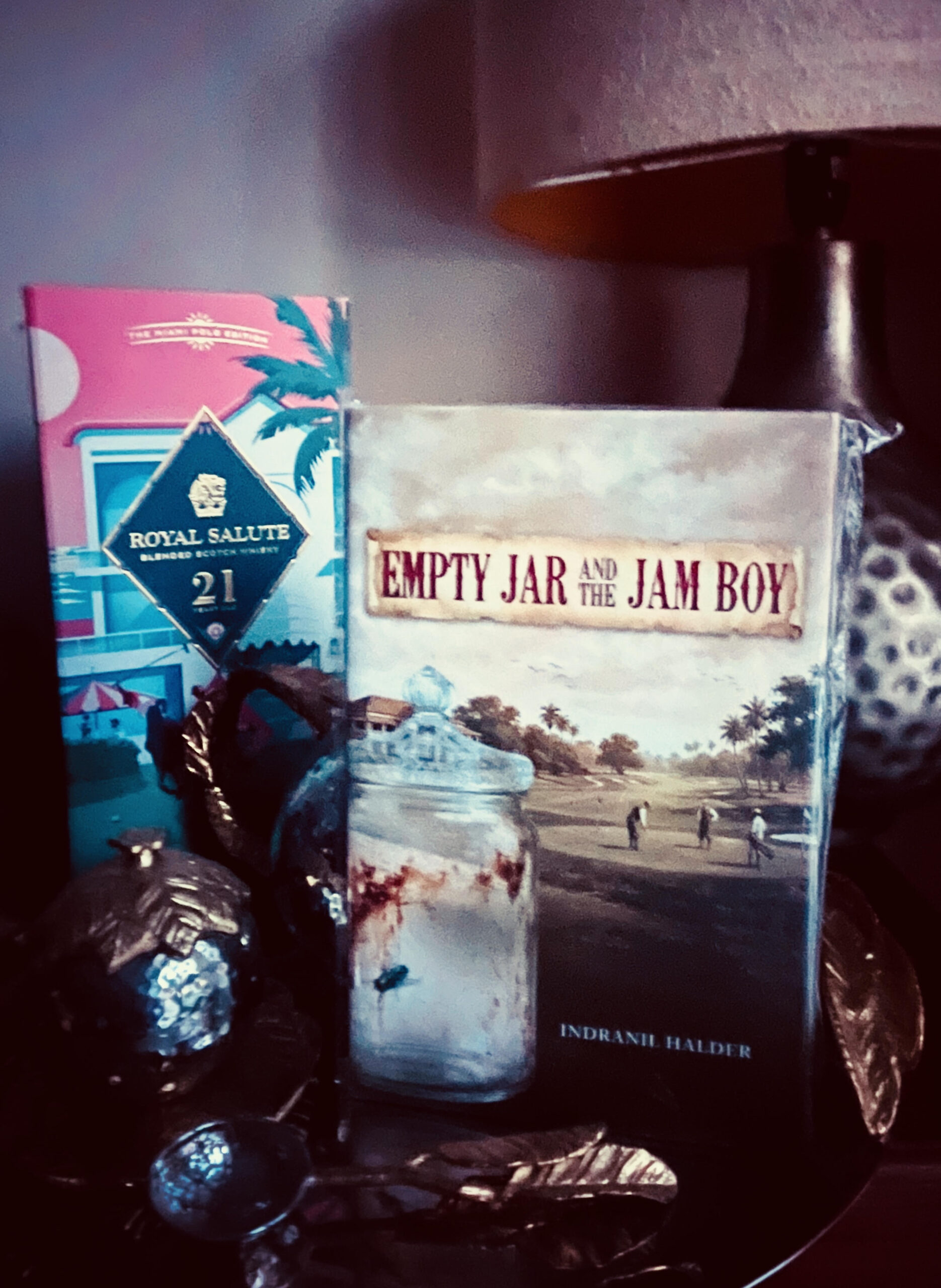
Empty Jar & The Jam Boy is a sweeping work of historical fiction that exposes the magnificent rise, deep economic systems, and tragic hollowings of colonial Bengal.
The “Empty Jar” serves as a powerful metaphor for the behemoth province of Bengal. Once a global titan of wealth, millennia of civilization, and thriving international trade, Bengal attracted merchants from every corner of the earth with its fertile soil, master craftsmen, and legendary textiles. Yet, successive invasions, exploitative policies, devastating famines, and bitter partitions ultimately left this economic powerhouse empty. Under British rule, surpluses from Bengali taxes were systematically used to purchase local goods, which were then shipped and sold abroad—funnelling trillions of British pounds into London’s private and corporate empires. At a time when 60% of India was governed by traders-turned-rulers, Bengal still managed to bankroll the expansion of the British East India Company with huge volume of trade and commerce. It financed development across Myanmar, Singapore, Hong Kong, and the United Kingdom—along with colonies like Fiji and South Africa—by providing soldiers, saltpetre, shipbuilders, and strategic commercial Bengali advisors.
Meanwhile, “The Jam Boy” unearths a dark, haunting piece of folklore from colonial Calcutta—a tragic history that is still recalled with quiet sadness at elite Bengali champagne, caviar, and mango parties across the globe today.
Set against the bustling backdrop of 19th-century trade and commerce, the story begins with the arrival of the East India Company’s Lord Canning and his wife in Bengal, then one of the richest provinces in the world. The narrative masterfully unfolds through two parallel worlds: the ambitious development of Lord Canning’s pet project backed by the Bengal business community—Port Canning on the Matla River—and the quiet artistic pursuits of his wife, who paints the lush flora and fauna of Bengal with the assistance of a local young man named Hori. Though the port and its bungalow do a brisk, high-volume trade for a few years, it was ultimately abandoned due to devastating storms.
The story also vividly revives vanished landmarks of the era, from the magnificent Felicity Room in Murshidabad, to the demolished colonial mansion “Rainey Castle” on Ballygunge Circular Road, and Asia’s first luxury hotel, Spence’s Hotel in Calcutta which hosted upper-crust parties, high-stakes meetings, and monumental business deals.
As the global stage fractures under the Panic of 1857—the world’s first interconnected financial crisis—and London suffocates under the “Great Stink” of 1858, Port Canning is destroyed by a ferocious Bay of Bengal cyclone. Amidst this chaos, Hori embarks on a poignant journey from a quiet Bengal village to Calcutta, known simultaneously as the grand “City of Palaces” and the “Wall Street of the East.” This is the fabulous city captured by iconic global creators: where Robert Burford advertised a massive panorama of Calcutta alongside Paris, Quebec, and Hobart in 1831; where celebrated artist William Wood created his historic Views of Calcutta lithographs; and where Prussian-born artist Jacob Janssen exhibited his breathtaking views in 1841, as reported by Australia’s Sydney Gazette. Yet, beneath the glittering surface of this metropolis, a series of cruel, systemic experiences ultimately force Hori to leave his beloved homeland behind forever.
Product Details
Editor: Saheli Mitra (Kolkata)
Publisher: Virasat Art Publication (Kolkata);
Future Editions: Translations in Bengali, French, and Chinese, alongside an upcoming audiobook release, are in active preparation.
Where to Buy
International Online Retailers: Available globally on Amazon and Blue Pencil.
Publisher Website: Order directly from Virasat Art Publication.
Kolkata Bookstores: Stocked at premier literary landmarks including Dasgupta (Est. 1818), U.N. Dhur & Sons (Est. 1914), Chakrabarti & Chatterjee, The Book Nook, Oxford Book Store and STORY Bookstore
West Bengal Book Festivals: Look for it at the Shobhabazar Rajbari Book Festival, the Berhampore Book Festival, and the historic International Kolkata Book Fair (the world’s largest non-trade book fair and Asia’s largest book festival